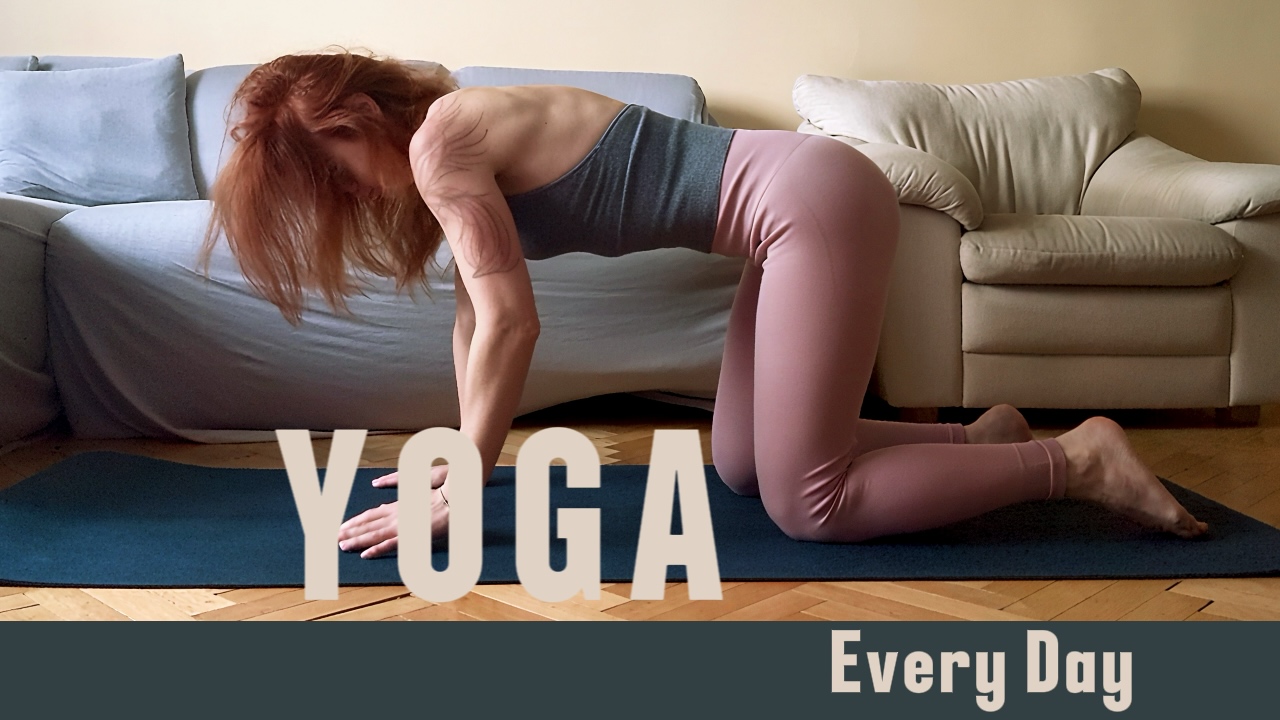
Core & Inner Muscle Yoga for Over 45
How Yoga Helped Me Shape and Gain Muscle After 45 — Stronger, Longer, More Defined
I’m a woman at 45. I’m a mother. I’m an employer with a busy life. Yet I never stop moving. For 28 years I’ve been active. Twenty-one years ago, I had a serious injury. Since then, I’ve had implants in my spine. Still, I never give up.
One morning, about a year ago I turn into daily yoga practice, I paused mid-movement. I caught my reflection in a window. Immediately, I felt something different. At first, I thought it was just better definition. But then I realized it was more. My spine held me taller. My hips felt freed. My muscles looked longer. After years of gym sessions and calisthenics, yoga taught me something new. In short, it lengthened me from the inside out.
Let me be clear. Stretching is not just touching toes. Likewise, it is not only surface work. Instead, yoga goes deeper. It reshapes muscle fibers. Moreover, it loosens fascia. It also calms the nervous system. As a result, your body moves with more ease. Therefore, you perform better. Above all, you feel different — softer, stronger, and more alive.
After Forty: Why “Stretching from the Inside” Changed My Shape and Strength
After a certain age, your muscle tissue becomes less elastic. So shaping your body means including different activities in your daily routine. I call that “stretching from the inside.” I discovered it a year and a half ago when I started yoga. I owe that to a very, very important person in my life.
Why I call it “stretching from the inside”
First, muscles are not simple ropes. Instead, they are layered, living tissue. They react to movement. They respond to breath. Over time — especially after forty — those layers tighten. Collagen stiffens. Fascia can cling. Joints begin to protect themselves. As a result, you can be strong and still feel tight.
Yoga interrupts that pattern. Slowly held poses give muscle fibers time under tension. Breath calms the nervous system. The body stops guarding. Fascial layers begin to glide. Muscle fibers can add length. In short, yoga helps tissues reorganize from the inside out.
Moreover, this is practical. When inner length returns, movement becomes smoother. Strength becomes more usable. Posture improves. And finally, the shape you see in the mirror changes — not just from bigger muscles, but from muscles that now sit on a longer, freer frame.
How aging changes your tissues — and how yoga helps
Aging brings change. Also, lifestyle and training habits make a difference. For example, decades of heavy lifts or explosive work can shorten certain muscles. Thus, you end up strong but limited. However, you can change that.
First, sustained loading in yoga encourages structural remodeling. In other words, muscles can form sarcomeres in series. That means potential for greater optimal length. Second, fascia responds to gentle, repeated tension. Over time, it becomes more pliable. Third, the nervous system calms with breath-led practice. Therefore, protective tone decreases. Consequently, range of motion improves.
Put simply, yoga corrects the stiff patterns that come with age. It offers a corrective template. Moreover, it reshapes how muscles function in everyday movement. So, you regain fluidity. Also, your strength becomes more usable.
Yoga versus static stretching: what’s different
Many people do a quick hamstring pull after training. That helps for a moment. Yet, in reality, yoga adds several critical elements that change the body in a lasting way. First, it gives time under tension — for example, a low lunge held with engagement is not the same as a passive reach. Second, it asks for eccentric control — you lower and move with intent, thereby training fibers to lengthen while loaded. Third, breath is central: slow, mindful exhales calm the nervous system and thus let tissues soften into new ranges. Fourth, importantly, yoga works chains, not isolated parts — linking hips to spine and shoulders to thoracic mobility so fascia can glide and movement becomes more coordinated. Finally, it blends strength with shape: as a result, better length‑tension relationships mean more usable power and cleaner muscle lines.
Five things yoga gives you, fast
- First, time under tension: holds long enough to remodel tissue.
- Second, eccentric control: deliberate lowering so muscles lengthen under load.
- Third, breath‑driven change: exhales that reduce protective tone and invite release.
- Fourth, chain work and integration: multi‑joint, fascial freeing rather than isolated stretches.
- Fifth, strength plus shape: improved function and visible, balanced muscle definition.
Consequently, mobility from yoga is functional. Static stretches can feel good and, for that reason, are useful in the moment. However, they rarely change how you move under load. Meanwhile, yoga integrates length with strength. Over time, therefore, that integration frees movement, improves performance, and reshapes how your muscles sit on your frame — which is why, when I added daily yoga, my core tightened and, ultimately, my six‑pack began to show more clearly.
How yoga changed my training — and my look
No matter how busy my days, I always find 10–15 minutes for my practice. Sometimes, when time allows, I stay on the mat for two hours. Both counts. Since I started doing yoga daily, my training changed — and so did my body.
First, my deep squats feel natural again. Second, pull‑ups use a fuller range. Third, shoulder work is less painful. Also, my muscles sit on longer, more balanced lines. Consequently, the mirror shows a different body. Importantly, that change is not just more muscle. It is internal reorganization. In other words, yoga shaped me from the inside out.
Simple, practical steps I use
- Be consistent, not extreme. Practice most days. Even 10–15 minutes counts.
- Prioritize breath. Breathe slow and deep. Use each exhale to invite release.
- Hold with engagement. Stay present. Hold 45–90 seconds. Protect joints with slight engagement.
- Train eccentric control. Move and lower with intent to lengthen muscles under load.
- Work multiple planes. Add twists, side bends and hip openers to free fascial lines.
- Pair yoga with strength. Use mobility yoga before a session or recovery yoga after it.
- Progress gently. Increase hold time, depth, or mild load gradually.
- Use props. Blocks, bolsters and straps give safer access and support.
Above all, be patient. Small, steady practice adds up. Over weeks and months, your movement will free up. Your strength will become more usable. Your shape will follow — cleaner, longer, and truer to you.
A few poses I return to
If you want a starting point, try these. Breathe softly and stay present.
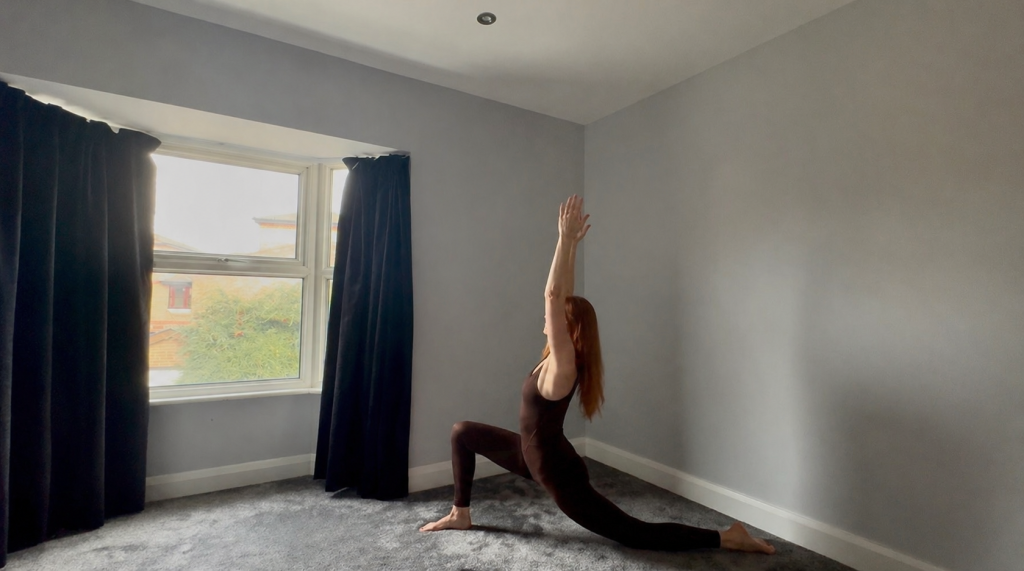
Low lunge (Anjaneyasana) — Hold 60 seconds each side. Sink the hips forward, feel the front of the hip and quad. Breathe into the front body and imagine space opening along the torso. Use a block under the back knee if needed.
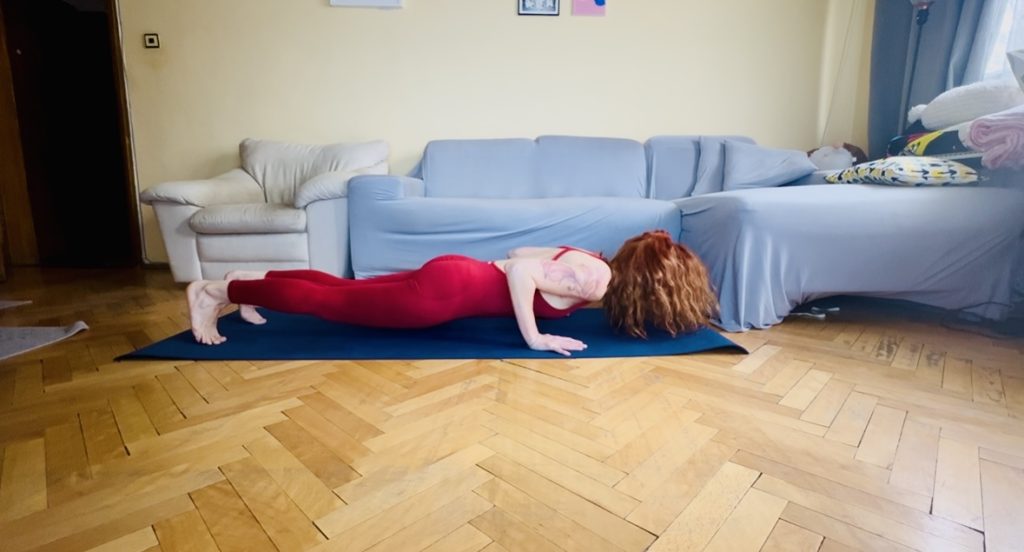
Chaturanga — 3–5 slow, controlled repetitions or hold 3–5 seconds in a supported version. Keep elbows close, engage the core and maintain length through the spine. This builds eccentric control for the shoulders and arms.
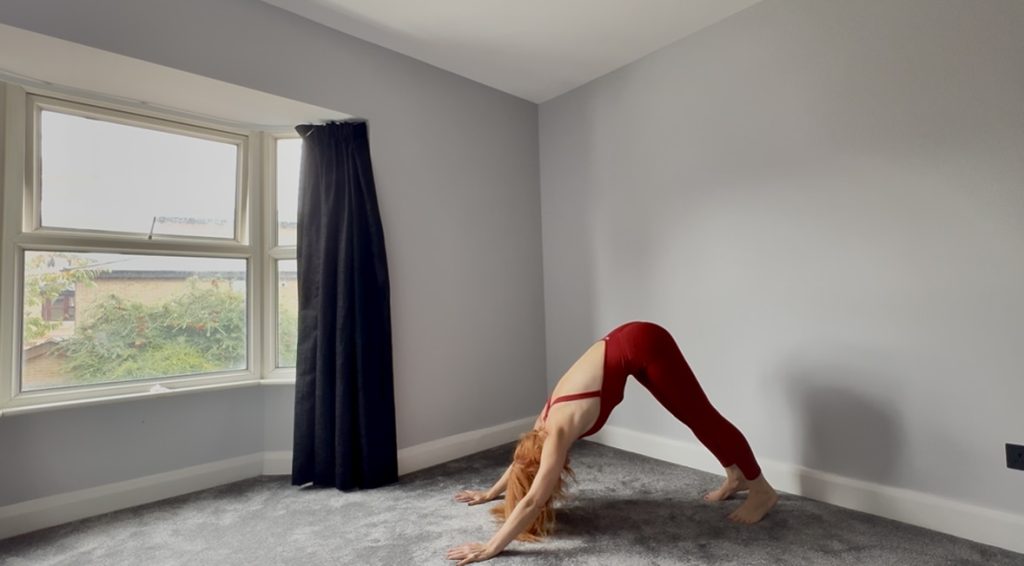
Downward Facing Dog — Hold 30–60 seconds. Pedal the feet, lengthen the spine, and soften the neck. Use it to reset the shoulders and hamstrings between stronger efforts.
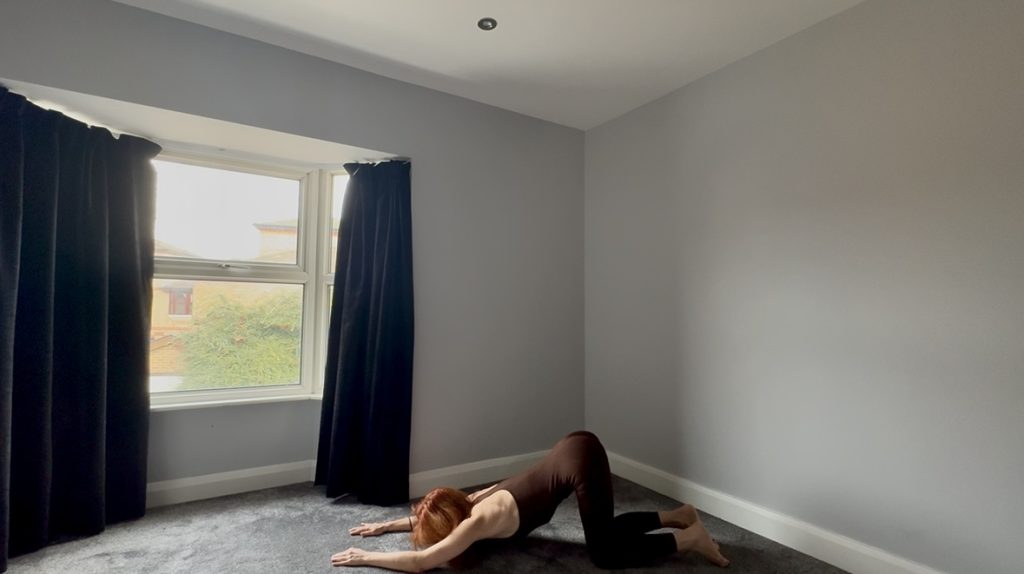
Extended Puppy Pose (Uttana Shishosana) — Hold 45–60 seconds. Melt the chest toward the floor while keeping hips over knees. Breathe into the upper back to create space in the thoracic spine and shoulders.
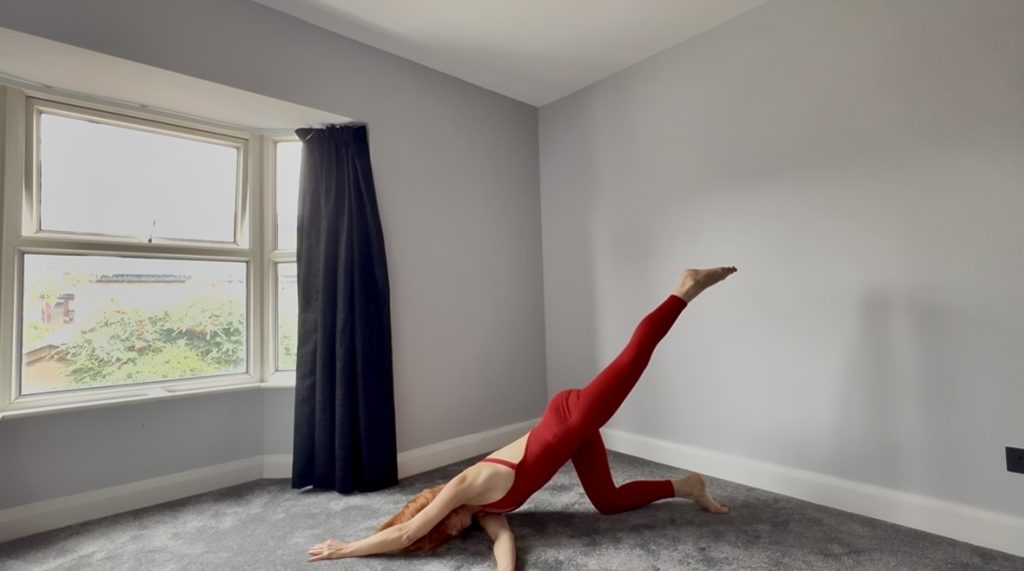
Thread-the-Needle (Needle) — Hold 30–60 seconds each side. From all fours, slide one arm thread under the opposite arm and rest the shoulder and head. Breathe into the twist to unwind the thoracic spine.
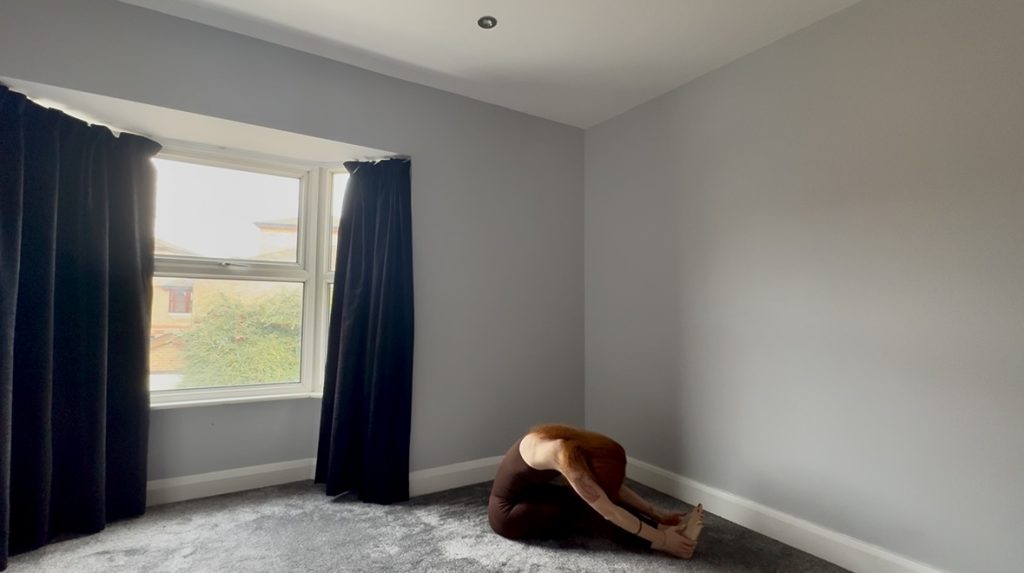
Seated Forward Fold (Paschimottanasana) — Hold 60–90 seconds. Keep a long spine and lead with the chest. Use a strap around the feet if the hamstrings are tight. Let each exhale invite a little more length.
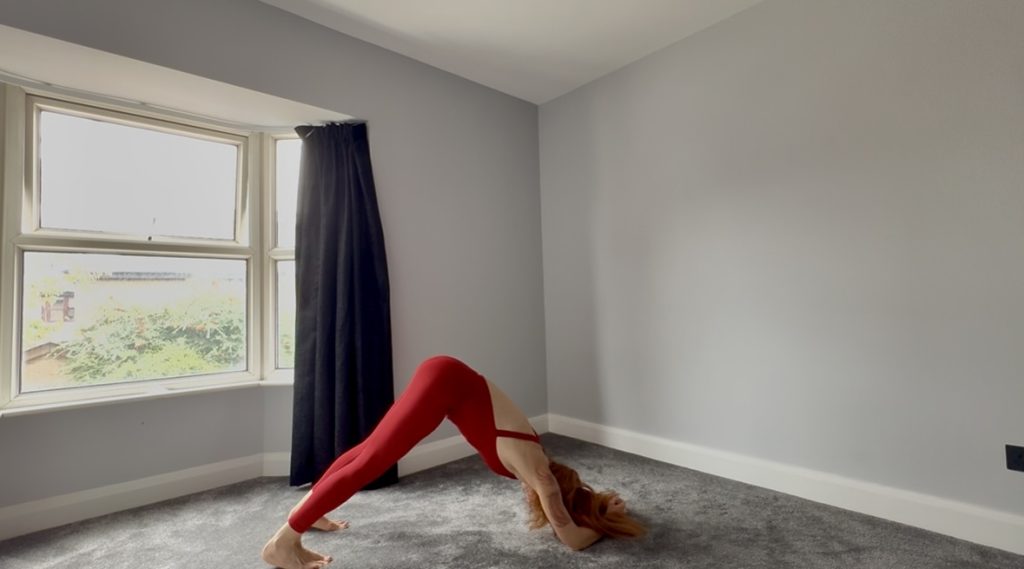
Dolphin Pose — Hold 30–60 seconds. Forearms on the mat, hips high, shoulders active. This strengthens the shoulders while offering a loaded stretch for the upper back and hamstrings.
Practice these with calm breath, gentle engagement, and consistency. Those poses are suitable for variations and flows. Even 10–15 minutes daily of these poses made a big difference for me.
The emotional heart of the practice
This part matters more than any technique. Indeed, yoga taught me to be kinder to my body. Moreover, it changed my relationship with time. At 45, life leaves marks — some from joy, others from wear. Nonetheless, daily practice became a ritual of reconnection. Each exhale felt like a permission slip. Each inhale felt like reclaiming space.
And no — it’s not boring slow motion. In fact, those deliberate, slow movements are backed by real science. They give so much, yet are easy to practice. You can do them anywhere. Often, you don’t even need a mat. All you need is your body and your breath. Consequently, you begin to build strength in ways you never felt before. You become stronger than you thought possible.
I’m hectic in my daily life. Always on the run. My diary is full. Still, since I started, things changed — not only my body, although my body at 45 feels powerful and alive — but my mindset, too. I’m calmer, more present, more grateful. And frankly, I’m thankful to the person who opened my eyes to yoga. Thanks to him, I stayed consistent. Thanks to that consistency, I keep finding new space inside myself.
If you need motivation to start yoga — and you think it’s too hard or too slow — reach out. Find me on social media at Yogabeatflow or on my YouTube channel. I’ll help you begin, absolutely free.
My aim is simple: to help more people feel what I feel, to shift bodies, minds, and relationships with movement and breath.
Vesela G. Yogabeatflow